/ Laboratory
Color is measurable.
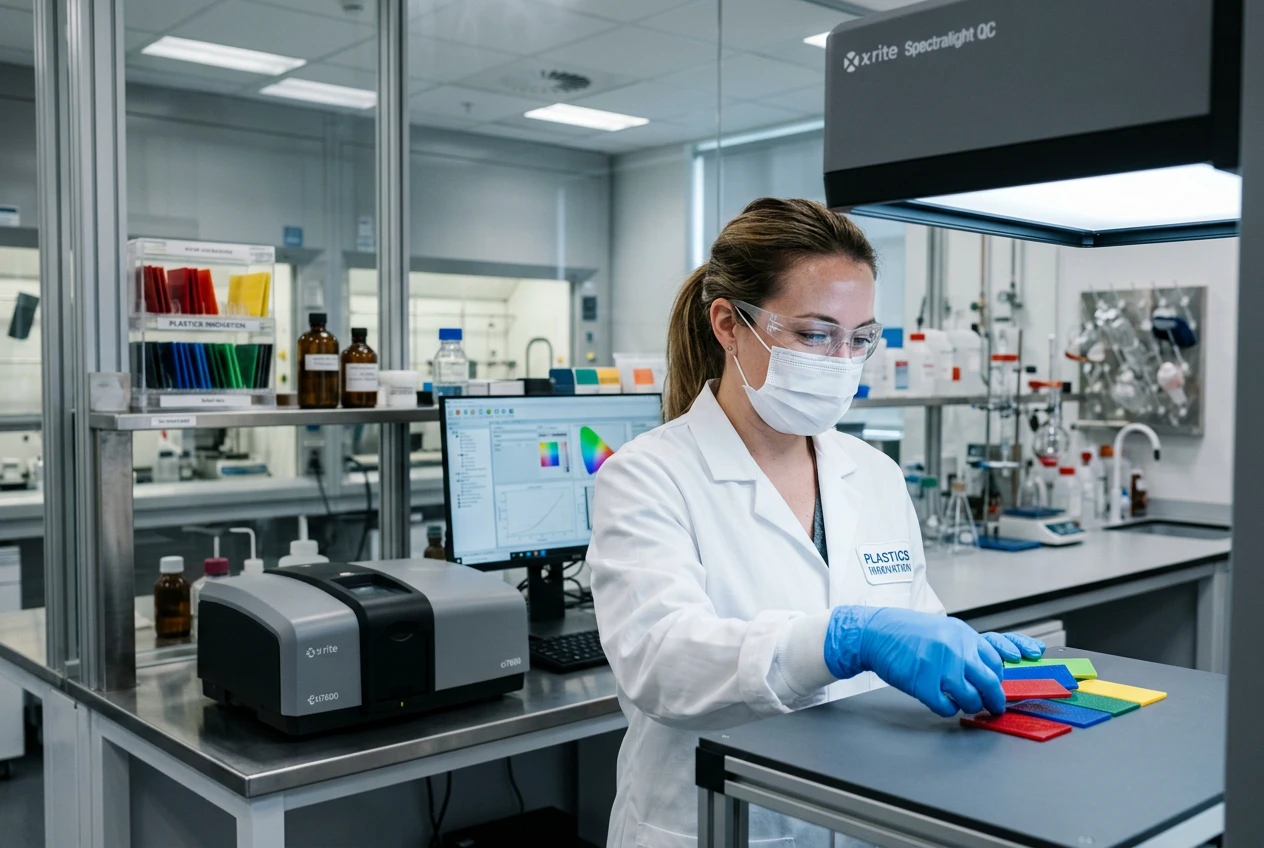
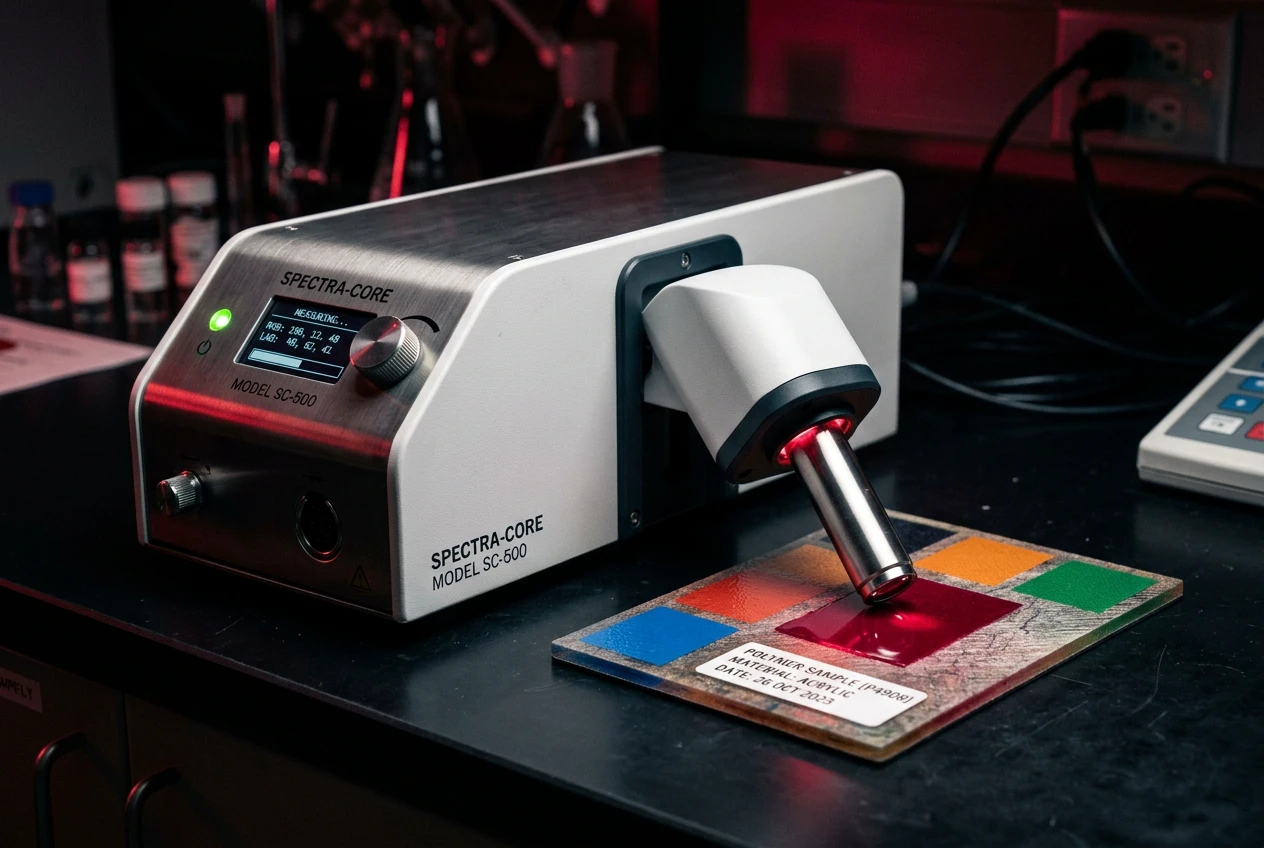
We run our own color laboratory — with a test injection molder, spectrophotometer and extrusion line. We don't guess here. We measure.
/01 — Why a lab?
So color behaves the same — batch after batch.
Most masterbatch problems don't surface on the first trial. They surface on the third delivery, when the pigment changes, the resin supplier changes or the shop floor warms up.
So we keep recipes under measurement control from day one — ΔE < 1 isn't marketing, it's the condition for batch release.
- Spectrophotometric control of every batch
- Test moldings in the target polymer
- Archive of recipes and reference samples
- Technical data sheet and certificate per product
/02 — Process
Six steps from reference to production batch.
- 01
Brief & reference
We accept a sample, a swatch (RAL, Pantone, NCS) or a finished part. We define polymer, process and requirements.
- 02
Pigment selection
Our process engineer drafts the first recipe using compatible pigments and a carrier matched to your base resin.
- 03
Trial extrusion
We extrude a sample on the lab line and run test injection moldings in your target polymer.
- 04
ΔE measurement
A spectrophotometer compares the result to the reference. Recipe corrections continue until ΔE < 1.
- 05
TDS & certificate
Every approved recipe gets a technical data sheet, a quality certificate and an index number in the archive.
- 06
Batch repeatability
Every subsequent production run starts with a measurement check. The result stays in the batch documentation.
/03 — Equipment
Gear that measures, not estimates.
- Colorimetric spectrophotometer
- Test injection molder
- Laboratory extrusion line
- Gravimetric mixers
- Precision dryers and dosers
- Density and MFI testing station